
Shoulder pain is among the most common reasons swimmers step away from the water — but it doesn’t have to be permanent. This guide breaks down what swimmer’s shoulder is, what causes it, and what evidence-based, non-surgical options are available to help you heal and return to the sport you love.
What Is Swimmer’s Shoulder?
Swimmer’s shoulder is a repetitive-use injury in which the ball of the upper arm bone (humerus) compresses against the shoulder socket (glenoid), pinching the surrounding structures, including tendons, ligaments, and the joint capsule. The clinical term is shoulder impingement syndrome. Symptoms of shoulder impingement from swimming can range from mild aching and reduced range of motion to sharp, radiating pain that interferes with daily activity.
Between 40 and 90 percent of competitive swimmers experience this condition at some point, making it the most prevalent injury in the sport.
What Causes Swimmer’s Shoulder? (And Who Gets It)
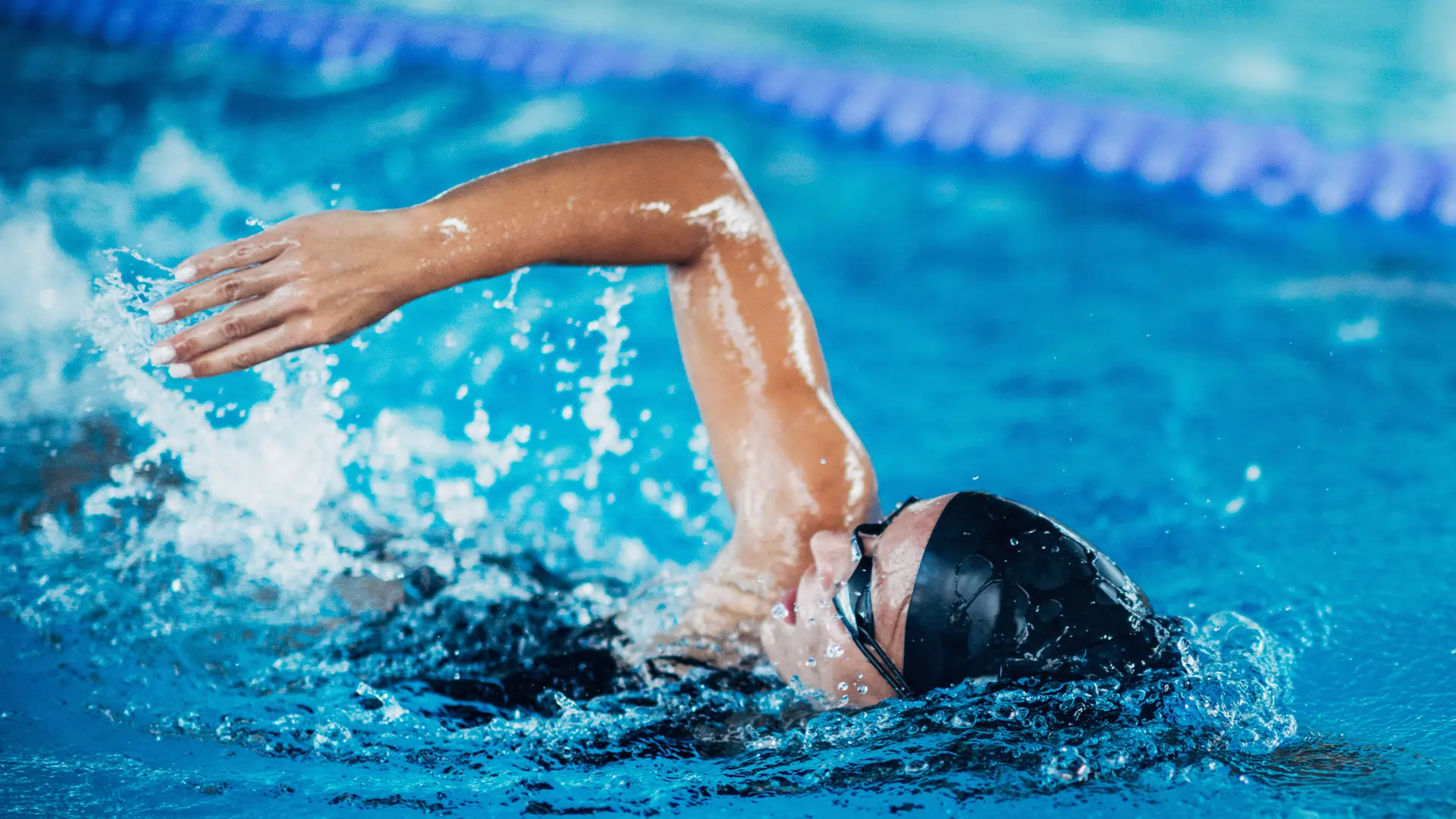
If you swim often, you know that the upper body is the driving force of movement. Whether you swim breaststroke, freestyle, or fly, the repetitive overhead shoulder motion and pull of the arms provide much of the muscle power and propulsion through the water.
Repeated movements with the same set of shoulder muscles put wear and tear on the area and can lead to both joint restriction and muscle imbalance. Over time, constant exertion may lead to swimmer’s shoulder.
Remember that you don’t have to be a swimmer to experience swimmer’s shoulder or the shoulder impingement commonly referred to as swimmer’s shoulder. Any athlete who uses their shoulder muscles in constant, repetitive overhead motions, including baseball pitchers, volleyball players, and tennis players, can suffer from the motion restriction and muscle imbalance that can lead to the chronic inflammation and pain experienced in a swimmer’s shoulder.
Recognizing Swimmer’s Shoulder Symptoms
Not all shoulder discomfort signals injury. Normal post-exercise soreness is expected. The distinction lies in severity, persistence, and progression. Common swimmer’s shoulder symptoms include:
- Pain radiating from the shoulder into the arm or upper back
- Sudden or sharp pain with overhead movement
- Reduced range of motion or difficulty reaching
- Increased pain when lying on the affected side
- Tenderness with direct pressure over the shoulder
If rest doesn’t resolve your symptoms within a few days, or if pain continues to worsen, it’s time to pursue a more structured evaluation and treatment approach.
Non-Surgical Swimmer’s Shoulder Treatment Options
Most cases of swimmer’s shoulder respond well to conservative, non-surgical care — particularly when addressed before significant structural damage has occurred.
Stretching
Physical therapy and neuromuscular rehabilitation include stretches to decrease restriction and improve muscle balance. This can relieve pressure from the injured area and improve access for proper muscle strengthening. The swimmer’s shoulder stretching in the video below targets three main areas: the pectoral muscles, the latissimus muscle, and the thoracic spine region.
Strengthening
Here at the Center for Healing and Regenerative Medicine, we have a mantra – Release, Balance, Build. The importance of releasing muscles that are restricted or up-regulated in a shortened position before attempting strengthening is simple – a muscle has an optimal resting position from which it most effectively activates and performs.
First, release using the swimmer’s shoulder-stretching techniques previously discussed, setting the shoulder up for most effective access and efficient strengthening. There are many shoulder muscles, and many different exercises to strengthen them.
Neubie by Neufit®
CHARM utilizes the NeuFit® Neubie® direct current electrical stimulation system to accelerate neuromuscular rehabilitation. By working directly with the nervous system, Neubie® therapy helps identify and correct dysfunctional movement patterns that standard diagnostics often miss, improving muscle activation, reducing pain, increasing range of motion, and supporting faster functional recovery.
Regenerative Treatments for Swimmer’s Shoulder
When conservative care alone isn’t sufficient, or when structural tissue damage is present, regenerative medicine offers a biologically driven path forward. CHARM’s fellowship-trained physicians offer Platelet-Rich Plasma (PRP) therapy for shoulder tendon injuries, ligament strains, and labral tears, targeting the underlying tissue pathology rather than masking pain.
For more complex or degenerative cases, Bone Marrow Aspirate Concentrate (BMAC) used alongside PRP may be more effective. All treatment recommendations are made following a thorough diagnostic evaluation and are tailored to each patient’s injury profile and goals.
When to See a Doctor About Shoulder Pain After Swimming
Seek a clinical evaluation if your shoulder pain has persisted beyond one to two weeks despite rest, if symptoms are worsening rather than improving, or if pain is interfering with sleep, daily function, or athletic performance. Early intervention generally leads to better outcomes and a faster return to activity.
Frequently Asked Questions About Swimmer’s Shoulder
How Long Does Swimmer’s Shoulder Take to Heal?
Recovery varies depending on injury severity and the promptness of treatment. Mild cases may resolve within a few weeks with rest and physical therapy. More chronic or structurally involved cases can take several months, particularly if regenerative treatment is indicated.
Can I Still Swim With Swimmer’s Shoulder?
In most cases, continuing to train through pain is not advisable and risks worsening the injury. Your physician may recommend modified activity, adjustments to your stroke regimen, or a temporary rest period while treatment progresses.
Is Swimmer’s Shoulder the Same as a Rotator Cuff Injury?
Not necessarily. Swimmer’s shoulder is a broad term describing shoulder impingement in overhead athletes. Rotator cuff pathology, including tendinopathy or tears, can be a component of that picture, but the two are not interchangeable. A proper diagnostic workup, including imaging when appropriate, is the only way to characterize the injury accurately.
Don’t Let Swimmer’s Shoulder Hold You Back — Visit Our Regenerative Specialists In Austin Today
CHARM’s team of fellowship-trained physicians takes a root-cause approach to shoulder pain — combining precise diagnostics, movement-based assessment, and advanced non-surgical treatments to get you back to doing what you love. If shoulder pain has been limiting your training or your daily life, we’re here to help.
Schedule a consultation with our team today.