
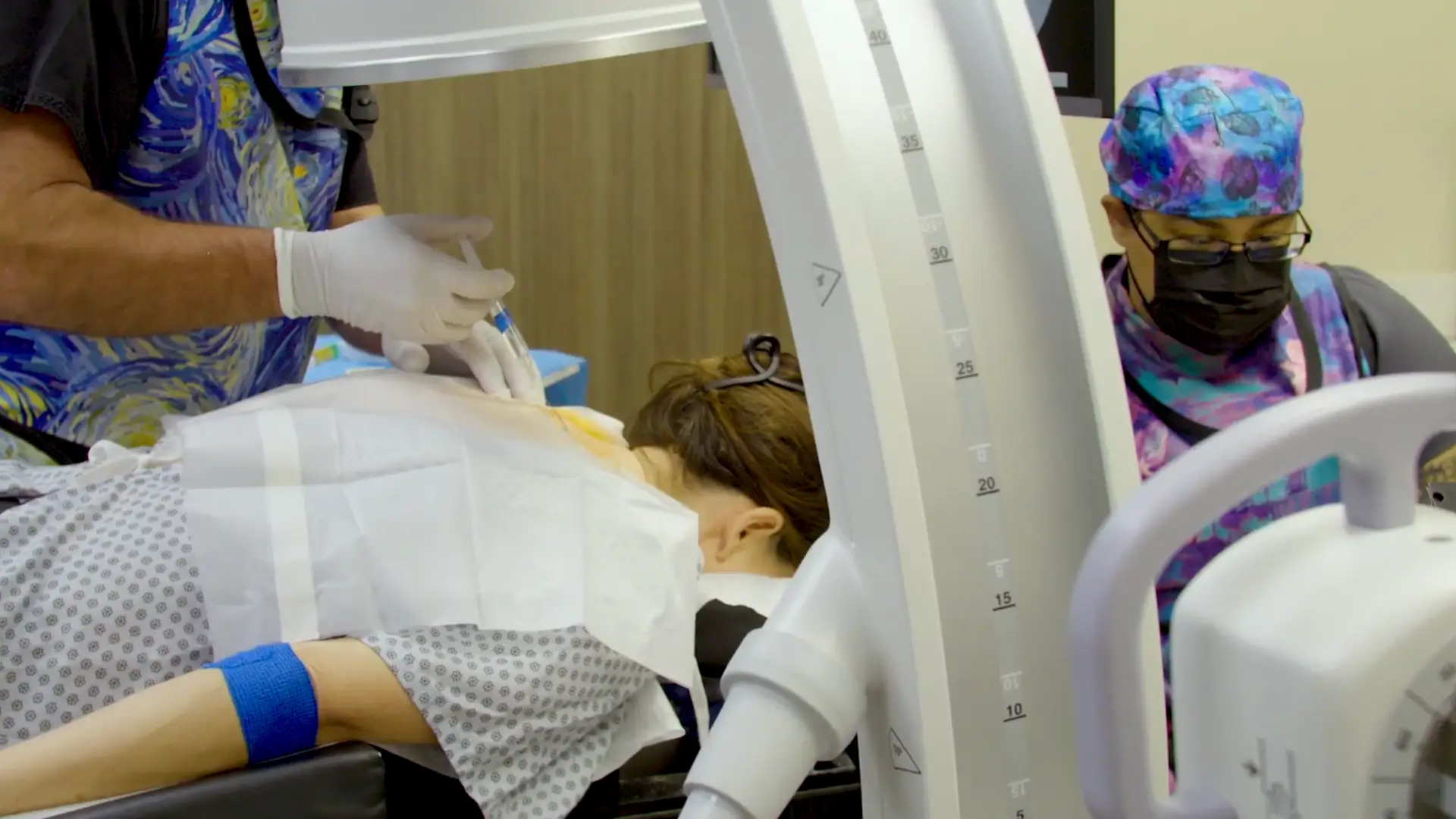
When pain starts limiting how you move or feel, regenerative medicine offers nonsurgical options that help your body repair itself. Two of the most effective treatments available are platelet-rich plasma (PRP) and bone marrow aspirate concentrate (BMAC). Both use your own biology to stimulate healing, but they work in different ways.
Before deciding on a treatment path, it’s helpful to understand how PRP and BMAC compare—and when each therapy may be the right fit for your pain.
What Is PRP Therapy?
PRP therapy is a concentrated solution made from your own blood. After a blood draw, the sample is placed in a centrifuge, which separates platelets from other components. The resulting plasma is packed with growth factors, which are the natural protein signals your body uses to repair tissue.
When PRP injections are applied to an injured tendon, joint, ligament, or muscle, they help:
- Kickstart your natural healing process
- Improve blood flow
- Stimulate the growth of healthier tissue
PRP for sports injury is common, but it can also be used for:
- Muscle strains and ligament sprains
- Tendon injuries
- Spine and disc degeneration
- Mild to moderate osteoarthritis
What Is BMAC Therapy?
BBMAC therapy is a regenerative medicine that uses stem-cell–rich bone marrow to promote deeper tissue repair. During the procedure, a small amount of bone marrow is collected from the hip bone and processed to concentrate stem cells, growth factors, and healing proteins.
Stem cells have the unique ability to differentiate into new tissue, making BMAC powerful for conditions involving advanced degeneration or structural damage.
Common uses for BMAC therapy include:
- Moderate to severe osteoarthritis
- Chronic tendon or ligament damage
- Spine conditions
- Bone injuries and fractures
- Cases where previous treatments have failed
What’s the Difference Between BMAC & PRP?
PRP and BMAC share the same goal—helping your body heal—but how they work, and the conditions they treat, can differ. Use the chart below to compare both therapies.
| Factor | PRP Therapy | BMAC Therapy |
| What It Is | Concentrated platelets and growth factors derived from your blood | Concentrated bone marrow containing platelets, stem cells, growth factors, and regenerative proteins |
| How It’s Obtained | Blood draw and centrifugation | Bone marrow aspiration from the hip bone, followed by lab processing |
| Primary Mechanism | Boosts healing, mediates inflammation, and supports tissue repair | Stimulates deeper regeneration through stem cells |
| Best For | Mild–moderate arthritis, tendinopathy, sports injuries, ligament sprains | Moderate–severe arthritis, cartilage loss, tendon tears, spine degeneration |
| Healing Potency | Strong for early-stage injuries | More robust for advanced degeneration, more severe or long-standing injuries |
| Recovery Timeline | Mild soreness for 1–3 days; improvement builds over weeks | Slightly longer initial recovery; but deeper repair continues over weeks to months |
| Procedure Complexity | Less complex, lower cost, minimal downtime | More involved procedure with higher cost due to stem cell concentration |
| When It’s Used | When conservative care isn’t enough, but surgery isn’t needed | Previous treatments haven’t provided enough relief or injury is more severe |
| Combination Use | Sometimes paired with BMAC to amplify growth-factor support | Often combined with PRP for enhanced regenerative potential |
BMAC vs PRP: Which Therapy Is Better for Your Type of Pain?
Deciding between PRP and BMAC depends on the severity of your condition, how long you’ve been dealing with the pain or injury, and the tissue involved. PRP is often the preferred option for recent injuries, mild degeneration, or inflammatory tendon and ligament issues. It’s also ideal when you want a less invasive treatment with minimal downtime.
BMAC may be a better fit if your pain comes from advanced arthritis, chronic tendon damage, or spine-related degeneration. Because BMAC contains stem cells and a broader mix of regenerative components, it’s recommended when tissue needs deeper structural support.
Your treatment history also plays a role. Someone who has tried physical therapy, bracing, medications, prior injections, or even surgery without relief may benefit from BMAC. In some cases, PRP and BMAC are combined to deliver both immediate healing signals and longer-term regenerative support.
Why Patients Choose Regenerative Medicine at CHARM
The physicians at CHARM conduct a thorough evaluation to identify the root cause of your pain and choose the best therapy for your goals. As your tissue heals, your rehabilitation plan adapts, including options for physical therapy support. Our on-site regenerative medicine laboratory ensures each biologics sample is optimized for concentration, quality, and potency.
Patients often express their appreciation for this level of personalized care. As one patient said:
“In our first visit, [the doctor] … was the first doctor that asked to observe me walking so he could actually visualize my issue … He was honest about results, and his predictions have come true. I’ve had two shots of PRP and stem cells now, and I’m progressing well. Truly life-changing, and I did not have to go under the knife. As a former athlete, I’m on my way back to an active lifestyle.”
If pain is limiting how you move, work, or train, don’t wait for it to get worse. Schedule a consultation with one of our regenerative specialists today.